

 478-286-0392
How To Clean A Shingle Roof Without Damaging Your Roof?
Written by
Leroy Whitt
Knowing how to clean a shingle roof without causing damage is key to maintaining your home’s appearance, performance, and overall roof lifespan. While it might seem like a simple task, using the wrong cleaning methods can strip away protective granules or even void your roof’s warranty.
- Preserves roof integrity: Gentle cleaning keeps shingles strong and watertight.
- Prevents premature wear: Proper care stops moss, algae, and stains from breaking down your roofing material.
- Improves curb appeal: A clean roof makes your home look newer and more maintained.
In this guide, we’ll explain how to safely clean your shingle roof, what tools to use, and which mistakes to avoid.
⭐️ Why Roof Cleaning Matters
Over time, shingle roofs collect dirt, algae, moss, and debris that can discolor your roof and eat away at its surface. Those ugly black streaks you see? They’re usually caused by Gloeocapsa magma, a type of blue-green algae that thrives on asphalt.
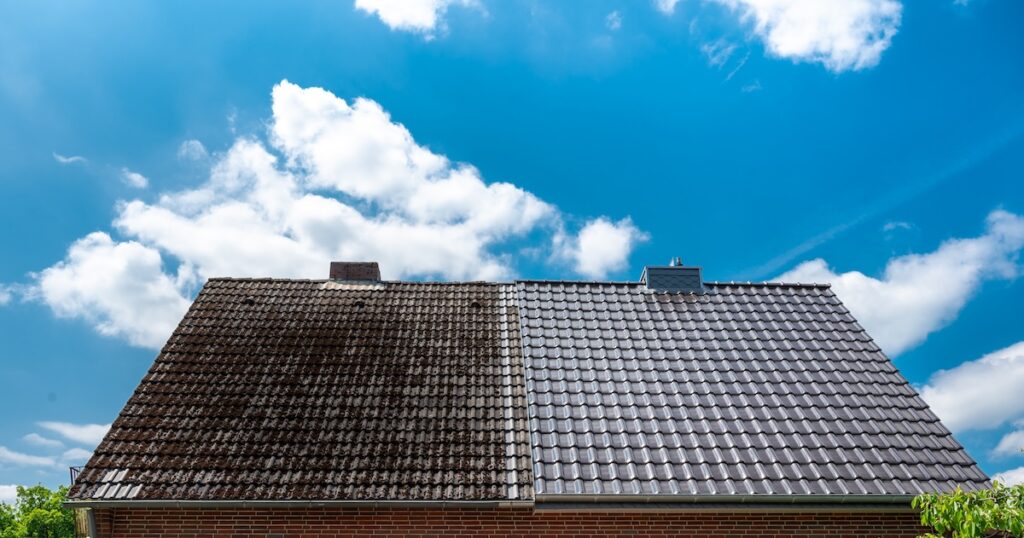
Problems Caused by a Dirty Roof
- Algae growth: Traps moisture and creates discoloration.
- Moss buildup: Lifts shingles, making them vulnerable to wind and water damage.
- Clogged gutters: Debris buildup on the roof can wash into your gutter system and cause drainage issues.
- Decreased efficiency: A dirty roof may retain heat more than a clean one, affecting your attic temperature and energy bills.
🧽 Tools and Supplies You’ll Need
Before you start cleaning, gather everything you need to do the job safely and effectively. Here’s what to use—and what to avoid.
- Soft-bristled brush or broom: For gently loosening moss and debris.
- Low-pressure sprayer or garden pump sprayer: Delivers cleaning solution without damaging shingles.
- Oxygen bleach solution: Preferred over chlorine bleach for being less corrosive to your roof and landscaping.
- Safety gear: Non-slip shoes, gloves, and a harness if accessing a steep roof.
- Hose with spray nozzle: For rinsing—do not use a pressure washer.
- Tarp: To protect plants and landscaping from runoff.
✅ 8 Steps: How To Clean A Shingle Roof
Following the right process is critical to protecting your roof and ensuring you don’t void any warranties. Here are the steps you should take:
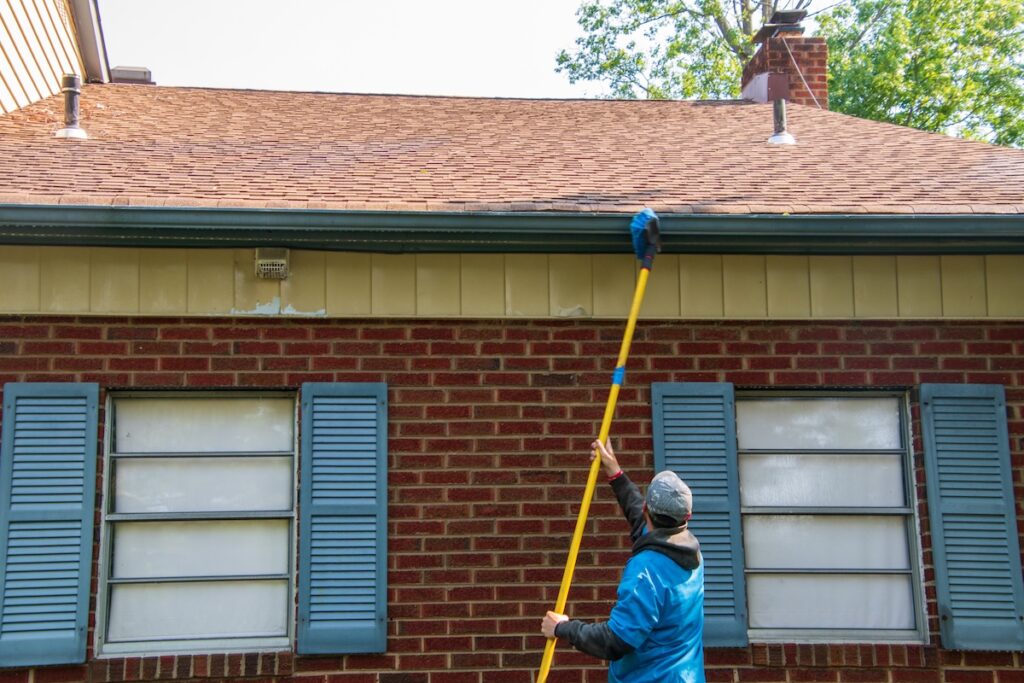
- Inspect Your Roof First: Look for damaged or missing shingles, lifted edges, or soft spots before cleaning. Address any repairs beforehand to avoid worsening issues during the wash.
- Remove Loose Debris: Use a soft brush or broom to gently sweep off leaves, branches, and loose dirt. Always brush downward with the shingle grain to prevent lifting or cracking the tabs.
- Apply Cleaning Solution: Use a garden sprayer to apply an oxygen bleach or roof-specific cleaner. Work in sections, starting from the bottom up to prevent streaking. Let the solution sit for 15–20 minutes (or as instructed).
- Gently Rinse With a Hose: Rinse the solution off with a standard garden hose using low pressure. Always rinse from top to bottom to avoid pushing water under the shingles.
- Repeat for Stubborn Stains: For persistent moss or those ugly black streaks, apply a second round of cleaner and let it soak in longer before rinsing again.
- Clear Gutters and Downspouts: Rinse out your gutters and ensure they’re clear of any debris that washed off during the cleaning process.
- Inspect Your Roof Again: Once dry, check for any loose granules, multiple granule colors that may suggest wear, or any shingle edges that may have lifted during cleaning.
- Schedule a Professional Inspection if Needed: If you see any signs of deeper damage or premature wear, call a roofing contractor for an inspection to ensure everything is still in good condition.
❗️ What Not To Do When Cleaning Your Roof
Improper cleaning techniques can shorten the lifespan of your shingles and may even void the limited lifetime warranty on your roof. Here are the top mistakes to avoid:
Using a Pressure Washer
- Why it’s bad: High-pressure water can strip granules, break seals, and lift shingle edges.
- Better option: Use a low-pressure hose or pump sprayer to gently rinse dirt away.
Harsh Chemicals
- Why it’s bad: Chlorine bleach and ammonia can damage roofing material and surrounding plants.
- Better option: Use eco-friendly, oxygen-based bleach or a non-corrosive roof cleaner.
Scrubbing Too Hard
- Why it’s bad: Scraping or aggressive brushing can dislodge granules that provide triple layer protection.
- Better option: Let the cleaning solution do the work and use only light brushing if needed.
⏰ How Often Should You Clean Your Roof?
Roof cleaning isn’t something you need to do monthly, but it should be part of your home maintenance routine.
Ideal Frequency
- Every 2–3 years: For homes with average tree coverage and mild discoloration.
- Annually: For shaded homes or areas prone to moss and algae buildup.
- Post-storm: If storms have deposited debris, moss, or tree litter, it’s a good idea to clean and inspect afterward.
Regular cleaning also helps you keep your roofing material in optimal condition and avoid small issues from turning into big repairs.
🌱 Preventing Roof Algae and Moss
After cleaning your roof, it’s worth taking a few proactive steps to keep moss and algae from coming back.
Install Zinc or Copper Strips
- How they help: These metals release particles during rain that kill algae and moss.
- Where to install: Near the ridge line so water washes them across the roof surface.
Improve Roof Ventilation
- Why it matters: Better airflow in the attic reduces humidity, which moss and algae thrive on.
- Added bonus: Helps regulate temperature and prevents your roof from needing to retain heat unnecessarily.
Trim Trees and Remove Debris
- How it helps: More sun exposure dries out your roof faster and reduces the chance of algae growth.
- What to look for: Branches overhanging the roof or areas where leaves consistently pile up.
👷 When To Call a Professional Roof Cleaner
If you’re unsure how to clean a shingle roof safely, or if your roof is steep, damaged, or covered in heavy moss, it’s best to call in a professional.
Benefits of Hiring a Pro
- Experience with shingle care: Professionals know how to clean without damaging the granules.
- Safety: Trained technicians use harnesses and proper equipment to reduce fall risk.
- Warranty protection: A licensed roof cleaner can preserve your limited lifetime warranty if the work is done correctly.
- Early detection: A pro can spot signs of aging or potential failure, such as granule loss or subtle leaks.
👍 Keep Your Roof Clean the Right Way
Learning how to clean a shingle roof is about more than just removing dirt—it’s about preserving your home’s investment, avoiding unnecessary repairs, and protecting your roof’s warranty. With the right tools and methods, you can safely maintain your shingles and prevent long-term damage.
At Whitt’s Quality Roofing, we help homeowners maintain strong, beautiful roofs with expert guidance and professional care. If your roof is due for an inspection, contact us today. We’ll make sure your shingles stay strong and protected for years to come.


