

 478-286-0392
7 Proven Flat Roof Leak Repair Steps for a Lasting Fix
Written by
Leroy Whitt
Is your flat roof leaking or showing signs of water damage? You’re not alone and you’re in the right place. Flat roofs are notoriously prone to leaks, and knowing how to spot the signs early can save you thousands in repairs.
In this guide, you’ll learn exactly how to identify, diagnose, and repair common flat roof leaks. Whether you’re looking for a temporary fix or considering a full professional repair.
Key Takeaways
- Flat roofs leak at seams, drains, and flashing.
- Spot leaks early by checking stains or ponding.
- Common causes: age, poor install, weather.
- Patch small leaks; call pros for bigger issues.
- Maintain yearly: clean, inspect, recoat.
- GA repair costs: $200–$12,000.
- Insurance may help (if storm-related).
- Free inspections available in Georgia.
Let’s get started with everything you need to know about effective flat roof leak repair.

How to Locate a Flat Roof Leak
Tracking down a flat roof leak isn’t always straightforward. Water can travel along roof layers and structural components before revealing itself inside, making the actual source difficult to spot. However, using a systematic inspection process, you can significantly narrow down the origin.
1. Begin With an Indoor Inspection
Start inside your property and check for:
- Ceiling stains or discoloration
- Peeling paint or bubbling drywall
- Musty odors or damp areas
These signs often appear some distance from the actual roof leak. Follow the path of water damage backward to estimate where the leak may be entering from above.
2. Inspect the Roof Surface
Once you’ve identified a potential zone, access the roof (safely) and examine:
- Seams and flashing: These are common leak points where materials join.
- Ponding water: Standing water may indicate poor drainage and potential penetration points.
- Membrane damage: Look for blisters, cracks, punctures, or tears in the roofing material.
- Roof penetrations: Check around HVAC units, skylights, vents, or drains.
Take clear photos of any suspicious areas for reference or for sharing with a roofing professional.
3. Perform a Controlled Water Test (If Needed)
If no damage is visible, simulate rainfall using a garden hose:
- Wait at least 5–10 minutes per section before moving to the next.
- Have a helper spray one small area of the roof at a time.
- You remain inside to monitor for any new drips or damp spots.
4. When to Call a Professional
If you still can’t locate the leak, or if you’re dealing with widespread water damage, it’s best to call a licensed roofing contractor. Professionals use advanced tools like infrared scanners and moisture meters to detect hidden leaks without damaging the structure.
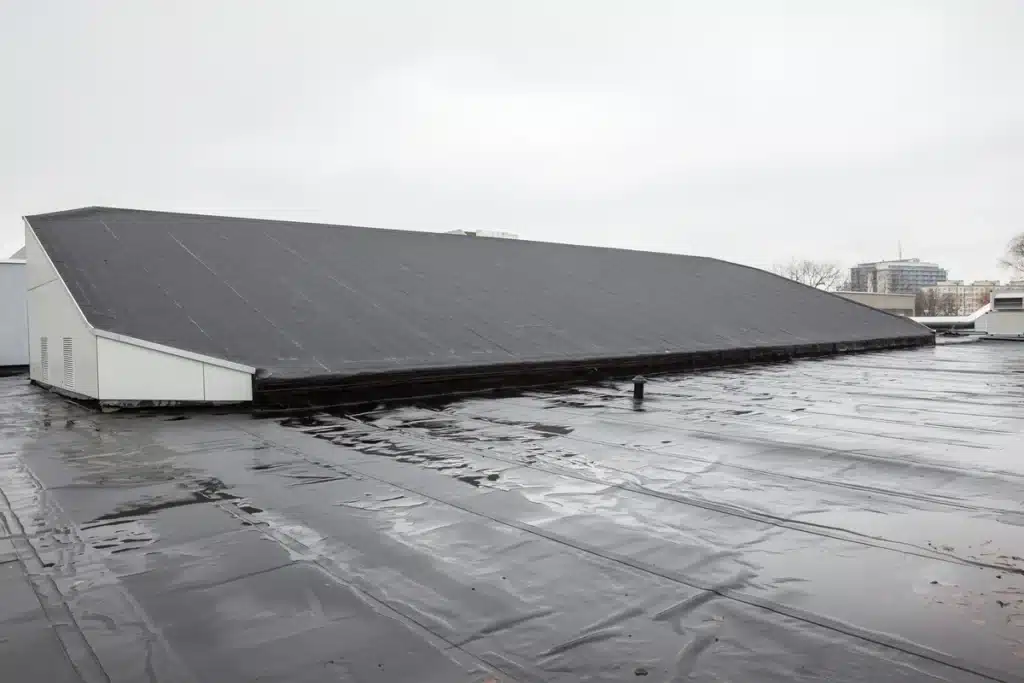
4 Common Causes of Flat Roof Leaks (and How to Prevent Them)
Understanding the root causes of flat roof leaks is essential, not just for effective repairs, but also for preventing costly future damage. Below are the most frequent culprits behind flat roof failures, plus expert tips to minimize your risk.
1. Poor Installation
One of the leading causes of flat roof leaks is substandard installation of materials like membranes, flashing, or insulation layers.
- Gaps, misalignments, or improper sealing can allow water to enter your building.
- Flashing especially around chimneys, vents, or skylights is a common weak point.
2. Aging Materials & Wear
Flat roofs typically last 15–30 years, but exposure to sun, wind, and rain will degrade materials over time.
- Symptoms of aging include: cracking, blistering, UV damage, and surface erosion.
- These issues weaken waterproofing and increase the risk of leaks.
3. Ponding or Standing Water
Flat roofs don’t always drain efficiently. Ponding water that remains for more than 48 hours can break down roofing membranes and lead to mold, leaks, or even structural sagging.
- Poor slope design or clogged gutters often cause this problem.
- Over time, standing water may accelerate roof deterioration.
4. Severe Weather Conditions
High winds, hail, ice dams, or heavy snow can crack seams, tear membranes, or force water under flashing.
- Sudden temperature shifts also cause materials to expand and contract, weakening seals.
- After storms, hidden damage can remain undetected until it becomes a major problem.
Now that you understand the key factors behind flat roof leaks, let’s walk through how to locate and repair them step by step.
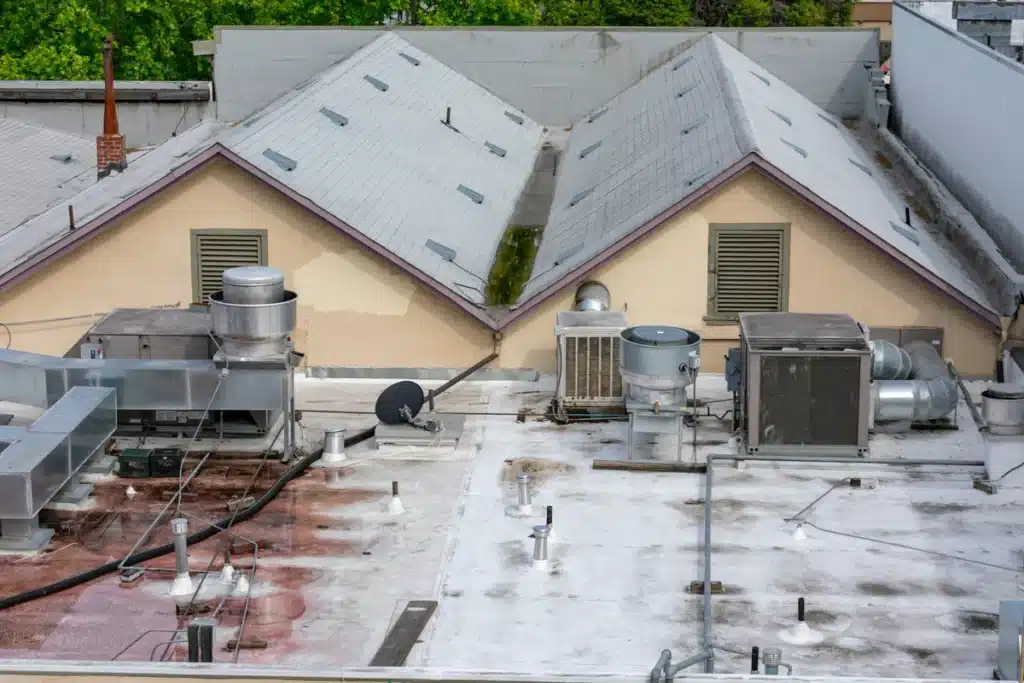
Flat Roof Repairs: A Step-By-Step Guide
Flat roof repairs might seem intimidating, but many small leaks can be handled with the right tools, materials, and safety precautions. Below is a detailed, step-by-step guide to help you confidently patch a leaky flat roof.
Step 1: Prioritize Safety
Before climbing onto any roof, make sure you have proper safety gear:
- Sturdy extension ladder
- Non-slip shoes or boots
- Fall protection harness or anchor system (especially for elevated structures)
- Safety glasses and gloves
Step 2: Clean the Repair Area
Use a broom or blower to clear away:
- Dirt and dust
- Loose gravel (common on built-up roofs)
- Leaves or organic debris
A clean surface ensures better adhesion for sealants or patches.
Step 3: Identify Your Roofing Material
Flat roofs are built with various materials, including:
- EPDM (rubber)
- TPO/PVC membranes
- Modified bitumen
- Built-up (gravel or tar-and-paper)
Each requires a specific type of repair product. Check your roof’s material before proceeding to avoid improper patching.
Step 4: Patch Small Cracks or Punctures
For minor leaks, follow this process:
- Apply roofing cement over the damaged area using a trowel or putty knife.
- Extend the cement at least 2–3 inches beyond the edges of the crack.
- Smooth the surface to ensure a watertight seal.
Step 5: Patch Larger Damaged Areas
For holes, tears, or deteriorated sections:
- Cut a patch at least 2 inches larger than the damaged area.
- Apply roofing cement to both the patch and the leak area.
- Press the patch firmly into place.
- Use additional sealant around the edges to secure it.
Step 6: Seal Flashing and Seams
Leaks often develop around:
- Skylights
- HVAC units
- Roof vents
- Edges where two materials meet
Apply a compatible sealant (such as polyurethane or flashing tape) to seal any cracks or lifting seams. Press firmly for a watertight finish.
Step 7: Know When to Call a Professional
DIY roof repair can handle small problems, but if you notice:
- Widespread cracks or pooling
- Multiple leak points
- Structural damage
- Recurring leaks after rain
Professionals use tools like infrared leak detection and can inspect the entire roofing system for hidden issues.ne right. You’ll rest easy knowing that your property was fixed by a professional.
Flat Roof Maintenance Tips to Prevent Future Leaks
Flat roofs are durable, but they need regular maintenance to stay watertight and energy-efficient. Without upkeep, small issues like clogged drains or cracked seams can turn into costly leaks and even structural damage.
Here are practical maintenance tips every flat roof owner should follow:
1. Clean Gutters and Drains (At Least Twice a Year)
Debris buildup can cause water to back up and pond on the roof. Make sure downspouts, internal drains, and scuppers are clear—especially after the fall and spring seasons.
2. Schedule Annual Roof Inspections
Even if everything looks fine from below, it’s essential to have a professional roofer inspect the roof each year. An expert can spot early signs of deterioration like:
- Hairline cracks
- UV damage
- Membrane shrinkage
- Flashing separation
3. Trim Overhanging Trees
Branches rubbing against the roof can tear membranes and clog drains with leaves. Keeping nearby trees trimmed reduces physical damage and organic debris buildup.
4. Inspect After Major Storms
Heavy rain, wind, and hail are common culprits of flat roof damage especially here in Middle Georgia. After a storm, visually check for:
- Debris or branches on the roof
- Standing water that remains after 48 hours
- New stains or sagging on the ceiling inside
5. Recoat the Roof Every 5–10 Years
Elastomeric coatings or modified bitumen sealants should be reapplied periodically to maintain waterproofing and UV resistance. The exact timing depends on the product used and weather exposure.
Seasonal Flat Roof Maintenance Checklist
| Season | Maintenance Task | Why It Matters |
|---|---|---|
| Spring | – Inspect for winter damage- Clean drains & scuppers- Trim back overhanging branches | Snow and ice may have caused cracks; debris can block drainage early in the season |
| Summer | – Recoat if needed- Check for UV wear and membrane cracks- Inspect flashing & seals | Heat and sun can dry out membranes, leading to cracks and sealant failure |
| Fall | – Remove leaves- Clear gutters and downspouts- Prepare for heavy rain and storms | Blocked drainage causes ponding; fall storms are a major leak trigger |
| Winter | – Monitor for ponding after rainfall- Check attic/ceiling for condensation- Clear snow or ice buildup safely | Cold weather can lead to moisture buildup inside and outside the roof |
Flat Roof Repair Costs in Georgia (2025 Pricing Guide)
If you’re dealing with a leaking flat roof in Middle or South Georgia, you’re likely asking: “What will this repair actually cost me?”
Below is a breakdown of common flat roof repair costs in cities like Warner Robins, Macon, Valdosta, Perry, Albany, and beyond based on real job averages in the region.
Average Flat Roof Repair Costs (By Service Type)
| Repair Type | Estimated Cost Range |
|---|---|
| Small patch (crack, blister, minor leak) | $200 – $500 |
| Seam resealing or flashing repair | $300 – $800 |
| Drainage correction (ponding water) | $800 – $2,000 |
| Flat roof coating (silicone/elastomeric) | $1.50 – $3.50 per sq. ft. |
| Full replacement (EPDM, TPO, mod-bit) | $6,500 – $12,000 (avg. home size) |
What Impacts Flat Roof Repair Costs?
| Factor | How It Affects Price |
|---|---|
| Roof size & material | Larger roofs or premium materials like TPO or PVC cost more |
| Roof access | Higher buildings or limited access points increase labor fees |
| Severity of damage | A minor crack costs less than widespread membrane failure |
| Urgency or emergency work | Same-day or storm-repair calls may carry a premium charge |
| Drainage or slope issues | Correcting slope or installing roof drains adds time and materials |
Flat Roof Leak Repair Made Easy
At Whitt’s Quality Roofing, we make flat roof repair stress-free and built to last. Your roof plays a crucial role in protecting your property and when it leaks, time is of the essence.
With over 15 years of hands-on experience serving homeowners and businesses across Byron, Warner Robins, Macon, and surrounding Georgia communities, our licensed team knows exactly how to identify, fix, and prevent future leaks whether it’s a small patch or a full restoration.
Don’t wait for the damage to get worse. Call us today at (478) 242-6276 or schedule your free flat roof inspection. We’ll get you a fast, honest assessment and help you protect your home with confidence.


